Palaces That Became Fairways
Two of India’s most storied courses began as extensions of a royal household. Playing either feels closer to visiting a family’s own grounds than checking into a resort.
Gaekwad Baroda Golf Club, Vadodara
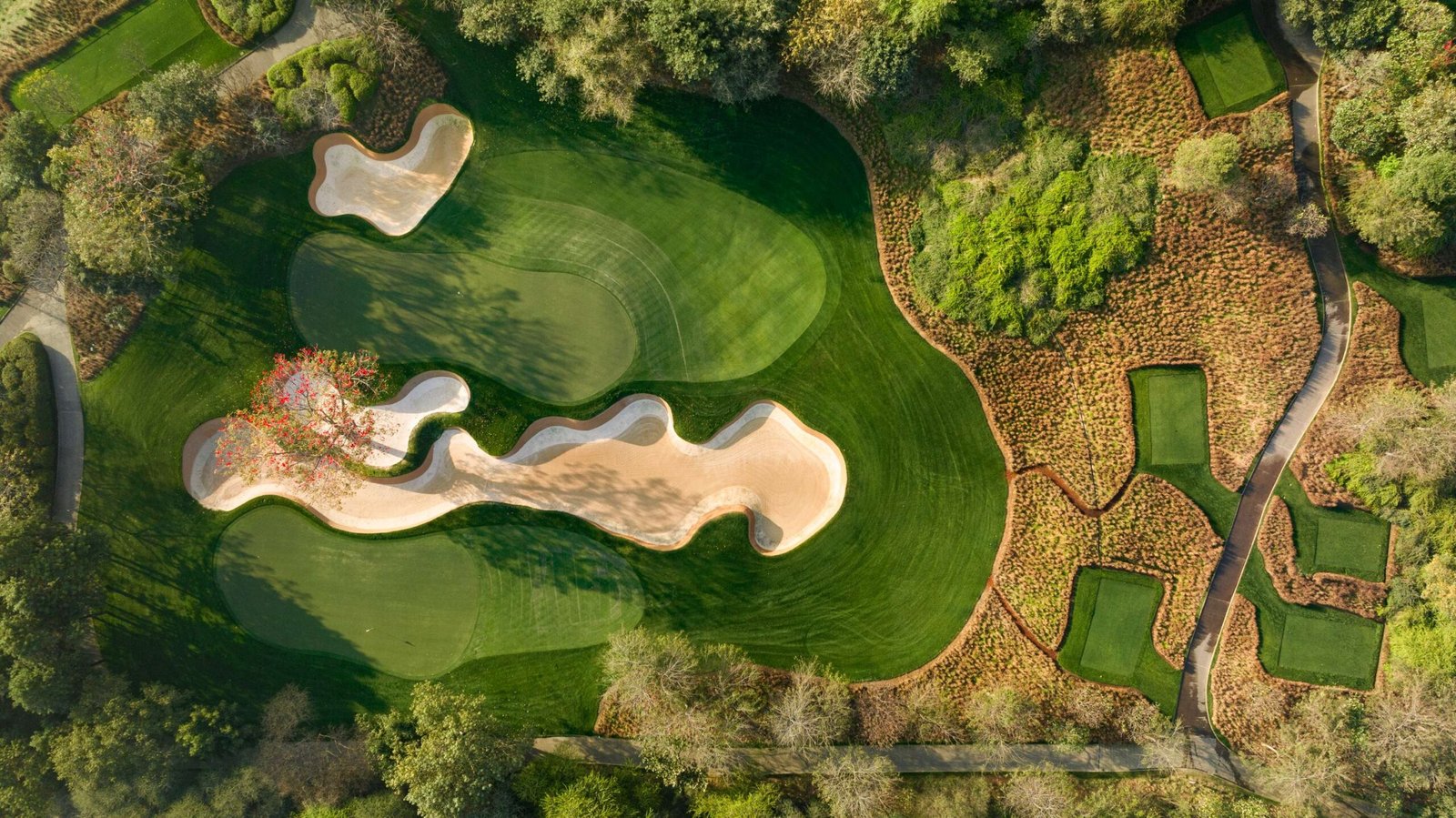
Gaekwad Baroda Golf Club occupies part of the Laxmi Vilas Palace estate in Vadodara, a city in Gujarat, the state along India’s western coast. The palace, built for the Gaekwad rulers of Baroda, ranks among the largest residences in the world, and the course that shares its grounds is the oldest private course in Gujarat. Old neem and tamarind trees line the fairways, planted long before anyone thought to cut a golf hole between them. The clubhouse occupies what was once the guesthouse of the neighbouring Motibaug Palace, and eighteen holes play out to Par 69, caddie and cart included as standard.
Rambagh Golf Club, Jaipur
In Jaipur, capital of the desert state of Rajasthan, the Rambagh Golf Club opened in 1927 alongside the Rambagh Palace, once home to Jaipur’s royal family and now a hotel. Jeev Milkha Singh, one of India’s most successful professional golfers, reworked the course in 2009. Its Par 70 layout plays under the ramparts of Moti Doongri and Nahargarh, two forts that have watched over the city for centuries, so the view off the tee takes in rather more than the fairway ahead. A practice range and putting green are open beforehand for anyone wanting to loosen up, and the round runs eighteen holes from mid-morning through to early afternoon.
“What drew us to these two was never the scorecard. Each one sits somewhere you would happily spend a morning even if you had left your clubs at home.”
From a Colonial Clubhouse to a Modern Championship
The other two courses on this route come from either end of India’s golfing history, one built for a colonial elite in 1901, the other for the twenty-first century in 2015.
Jodhpur Golf Club, Jodhpur
Jodhpur Golf Club belongs to the Sardar Club in Ratanada, opposite the old Chami Polo Ground. Built in an Indo-colonial style in 1901, the club once served Marwar’s aristocracy and the British officers stationed alongside them, and its parkland course has kept that character since. It remains a private members’ club with a restricted guest policy, so a tee time here is something we secure months out, not days.
DLF Golf & Country Club, Gurgaon
Gurgaon, a modern business district on the edge of Delhi, holds the DLF Golf & Country Club, widely rated among India’s finest golfing addresses. Twenty-seven holes play across two courses. The Gary Player Course opened in 2015, routed dramatically around lakes and a former quarry, while the original nine-hole Arnold Palmer Course, dating to 1999, remains the country’s only floodlit night-golf layout. Like Jodhpur, DLF is a members’ club, with visitor tee times generally reserved for overseas guests on weekdays, so this one gets arranged early too.
“We kept DLF for the last day for a reason. It is the most demanding course of the four, and the one worth ending on.”
One Journey, All Four Courses
Playing golf in India properly, at four clubs like these, is not something most visitors can put together alone. The access alone defeats most itineraries, and the distances between Gujarat, Rajasthan and Delhi rule out doing it by road without losing days better spent on the course.
“Once we saw how neatly these four clubs fell along the line from Mumbai to Delhi, the shape of the journey followed on its own.”
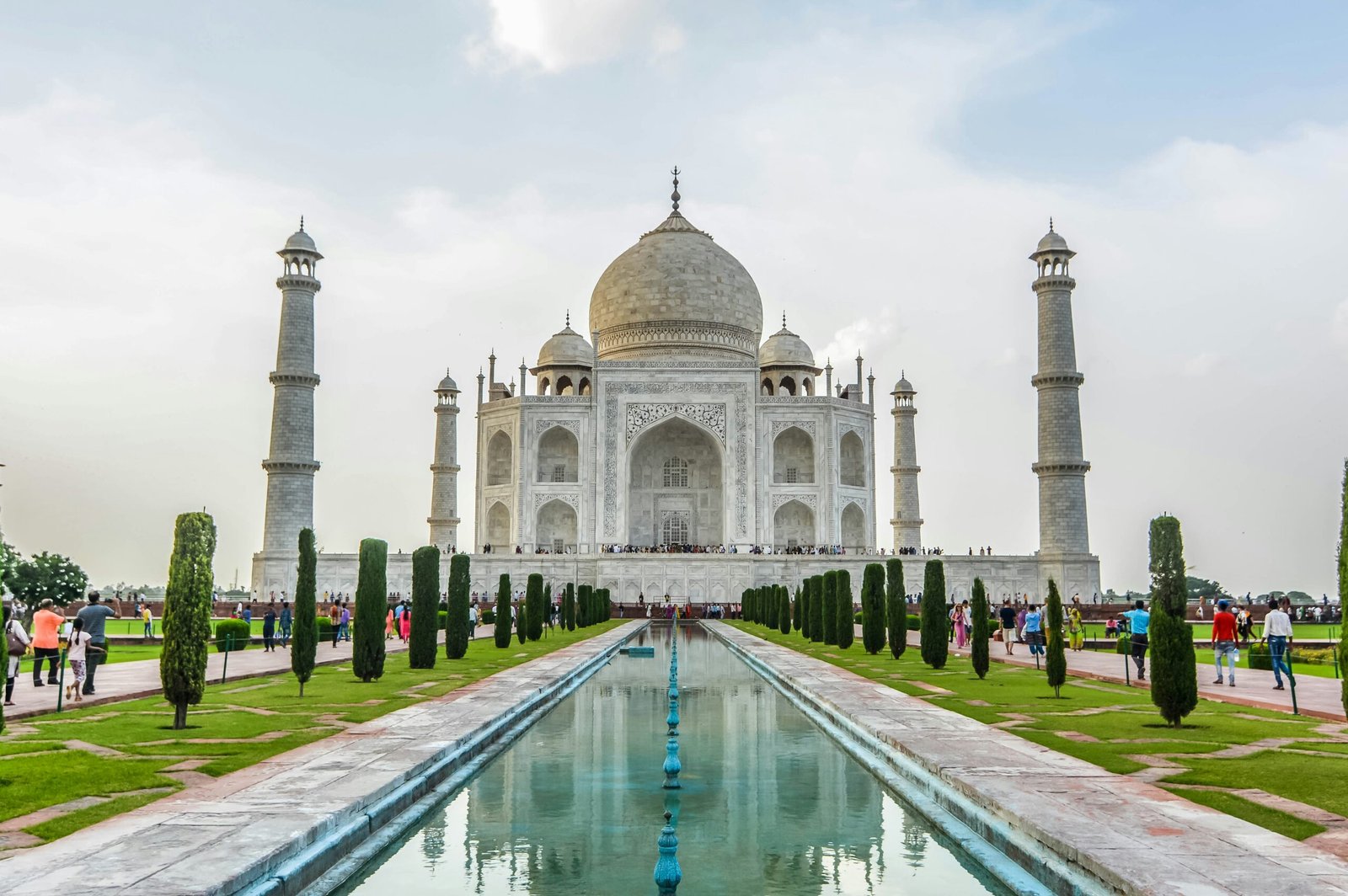
That is the gap Royal Greens & Rails was built to close. Running aboard the Deccan Odyssey from Mumbai to Gurgaon over nine nights, it is our own golf tour in India across exactly these four clubs, Gaekwad Baroda, Rambagh, Jodhpur and DLF, threaded onto a single rail journey with every tee time held in your name before departure. Only four mornings of the ten days go to golf, so a travelling companion who does not play still gets the Taj Mahal, a tiger reserve, and the forts of Rajasthan without missing a thing.
Between rounds, the train carries guests through the palaces, forts and markets that make the rest of the trip worth taking too. This is closer to how luxury golf travel should feel, unhurried, settled well in advance, led by the golf itself and not by the effort of reaching it.
“We kept the golf to four mornings. India asks for your attention in too many other ways to spend ten days looking only at fairways.”
If playing golf in India has been sitting on your list without a clear way to start, this is the golf tour India has been missing: four courses, nine nights, one train, every tee time held. We would be glad to talk you through it.