The History of Biryani, as Argued at the Table
Ask where biryani comes from, and you will get a different answer depending on who is holding the spoon. One popular account credits Timur, who supposedly carried it down from Central Asia in 1398. A more romantic version hands the invention to Mumtaz Mahal, the empress the Taj Mahal was built for, feeding an army. Both stories are repeated in a hundred guidebooks, and both are wrong, which has never once stopped anyone from telling them.
The duller truth is that no single person invented biryani at all. Its name comes from Persian. That one-pot rice and meat idea predates the name entirely, cooked by Central Asian nomads over open fires long before anyone wrote it down. Arab traders carried their own versions to India’s coasts. There is even a Tamil poem from about two thousand years ago describing soldiers eating a rice and meat dish that sounds suspiciously familiar. Biryani accumulated, over centuries, across three continents. Everywhere it landed, somebody local improved it, then claimed it.
Hyderabad’s claim is simply the strongest.
When the first Nizam broke away from the declining Mughal Empire in 1724 and set up his own kingdom on the Deccan, the royal cooks came south with him, carrying the Mughal court’s layered, sealed-pot technique. Hyderabad’s kitchens fed it local spice, sharpened the marinade, committed fully to the raw-meat kacchi method, and spent the next two centuries perfecting the result. At their peak, the Nizams were the richest royal family in the world, and their kitchens cooked like it. When people say Hyderabadi biryani is the best in India, this is the inheritance they are pointing at.
Where to Eat Hyderabadi Biryani
The dish lives at two ends of the city, and both are worth knowing. In the Old City around the Charminar, the biryani arrives fast and generous, ladled out at counters that have been feeding the same lanes for generations, eaten elbow to elbow with whoever is next in the queue. It is the dish in its everyday form, and in its everyday form it is very good.
"One portion here feeds two people anywhere else. Order accordingly, or do not, and take the rest with you."
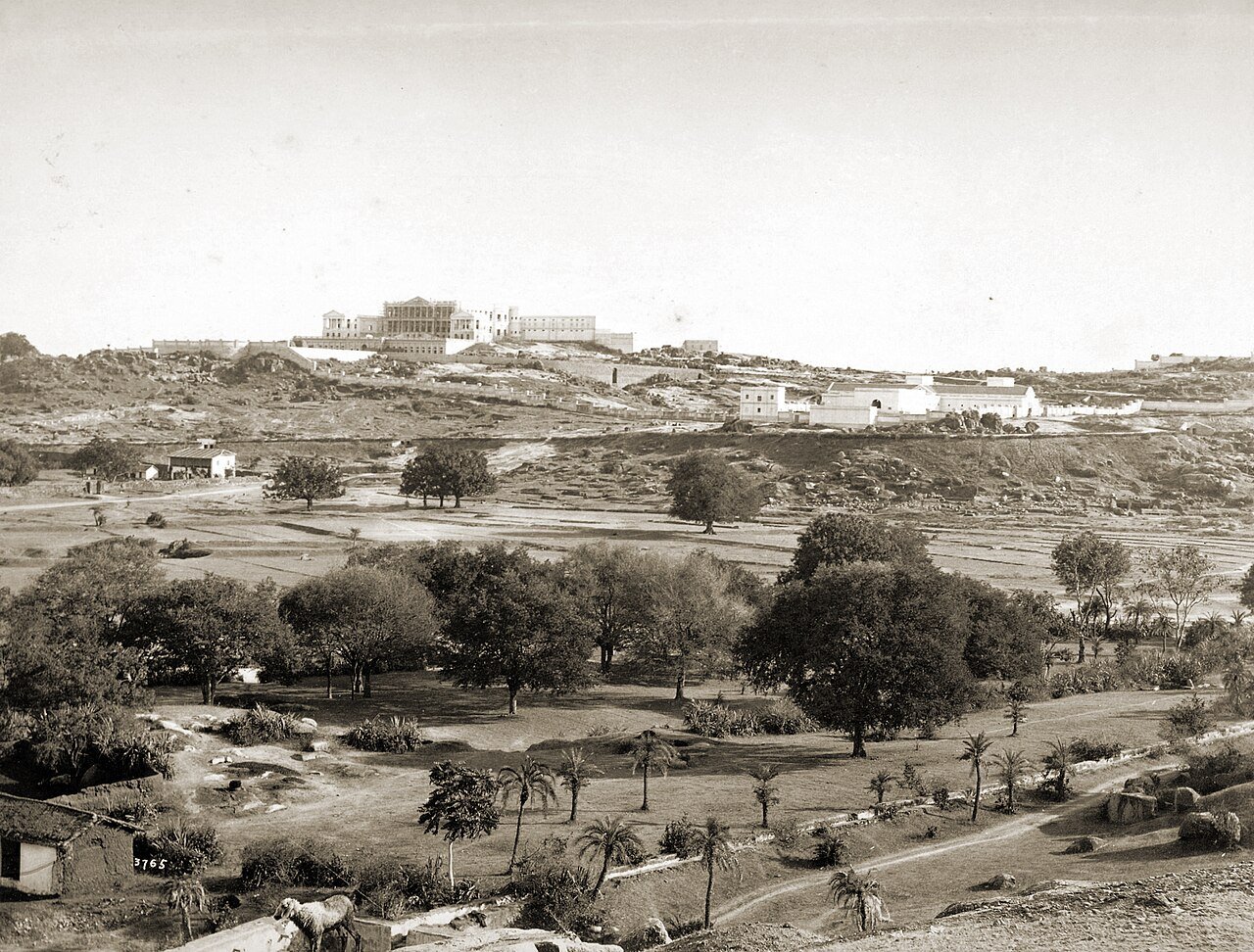
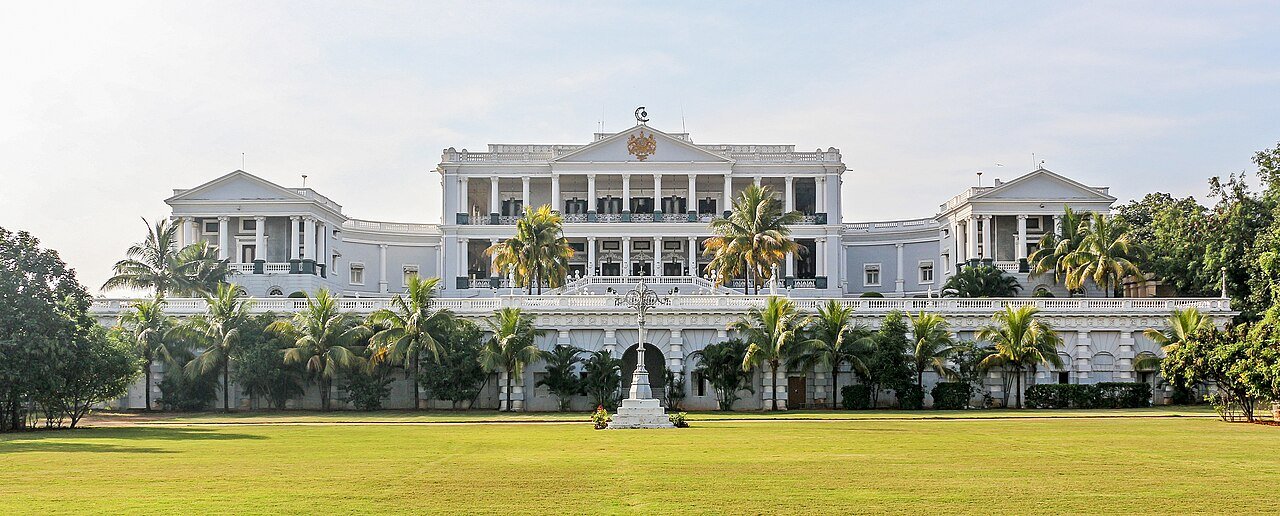
The other end is Falaknuma. Once the hilltop residence of the sixth Nizam, the palace is now restored under the Taj group. Its Hyderabadi restaurant, Adaa, serves the dish in rooms built for entertaining royalty, under Venetian chandeliers, with the pot opened at the table the way it was in the Nizam’s own dining hall. The palace banqueting table seats a hundred and one, said to be among the longest in the world, and the terrace next door once received King George V and Queen Mary. High tea in the afternoon comes with a view over the whole city. This is the version of Hyderabad that guests on The Great Southern Mail get an afternoon inside, and it changes how the biryani reads. Same dish, same method, same city, in an entirely different century.
"One should not ask for it to be mild. The chilli is holding the dish together, and taking it out leaves you with expensive rice."
The Side Dishes Are Not Optional
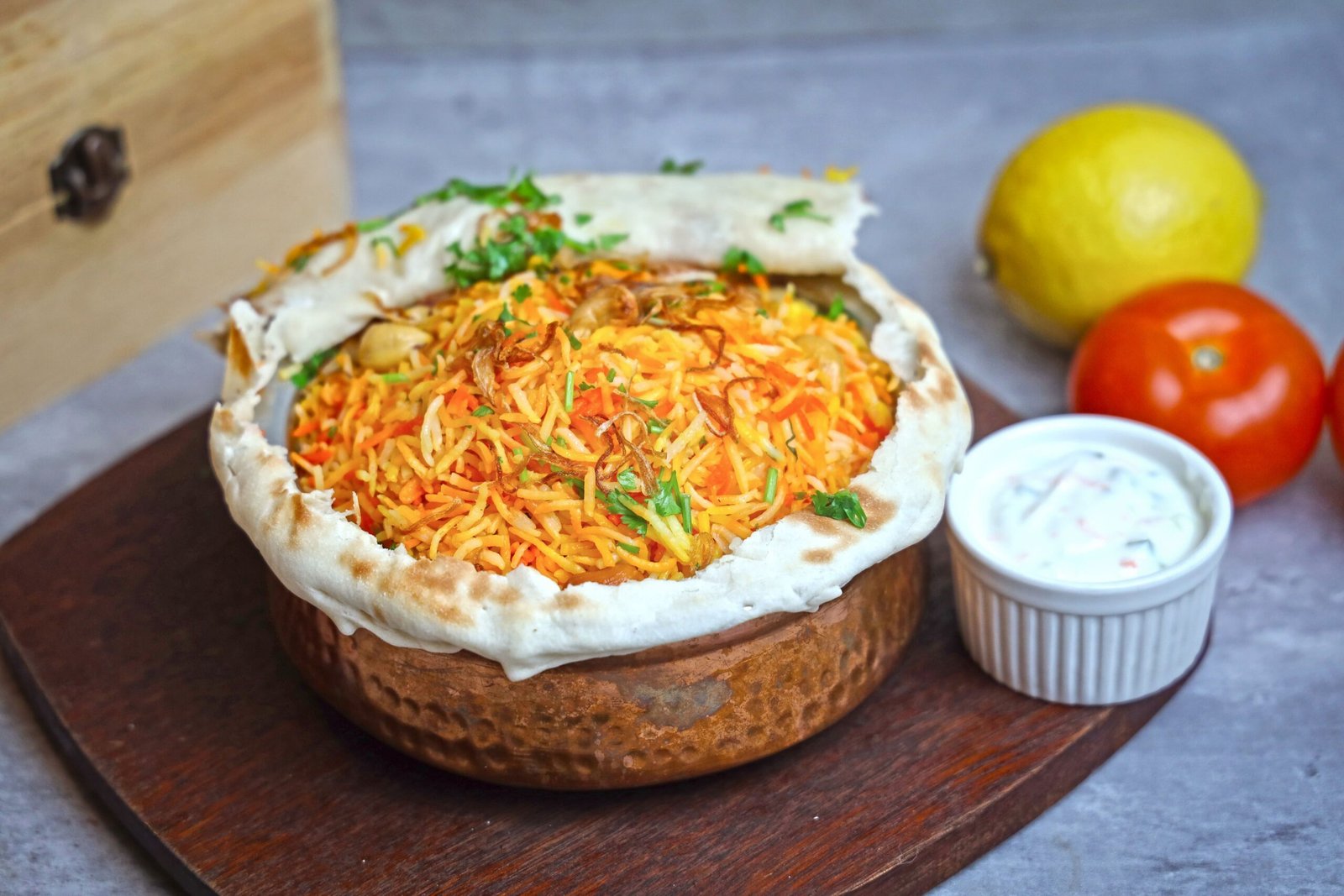
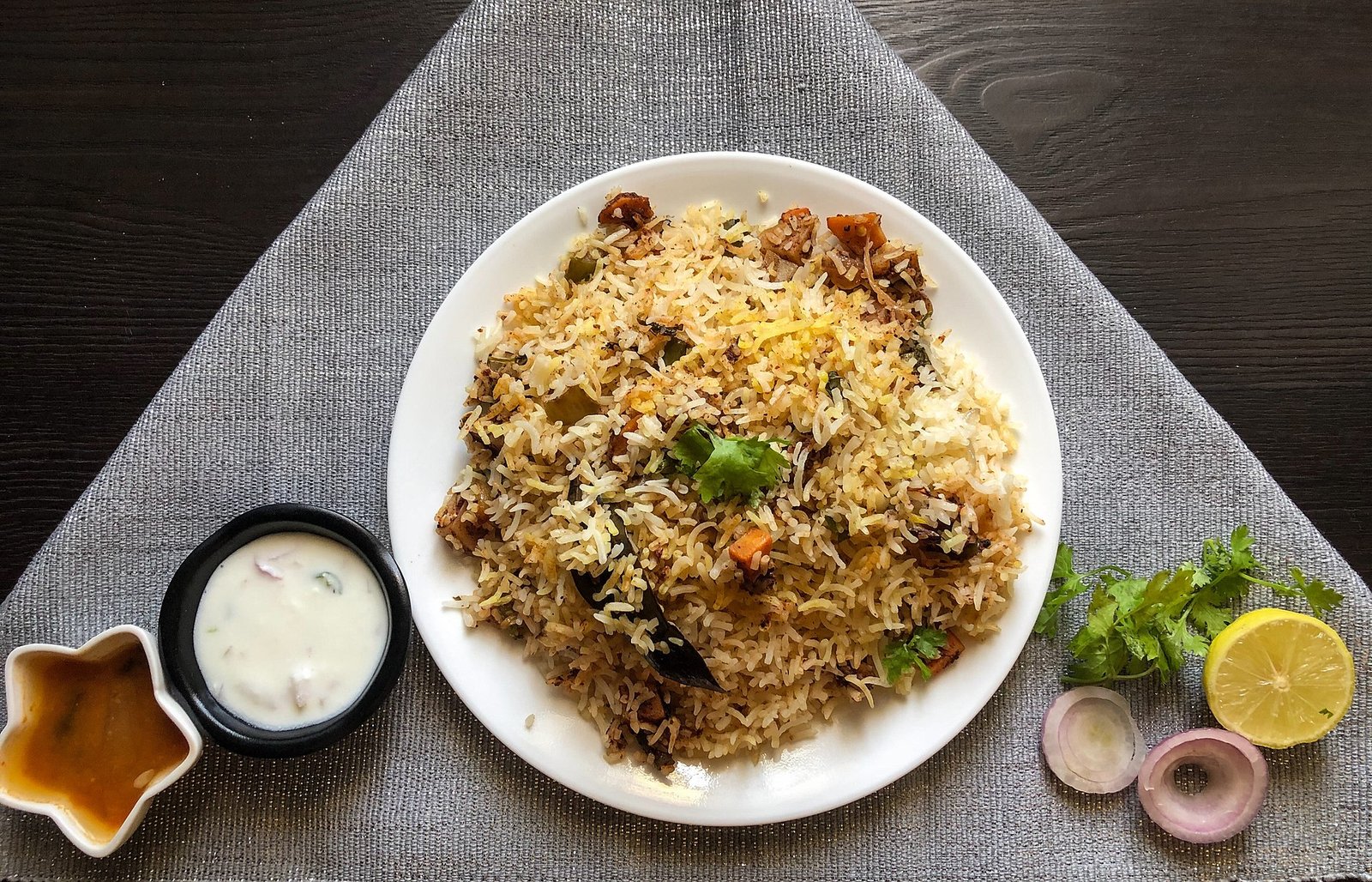
A proper Hyderabadi biryani never comes alone. Mirchi ka salan, a dark, tangy curry of peanuts and green chillies, exists for no other purpose than to sit beside biryani. It has held that single job for centuries without complaint. Raita, yoghurt cooled with mint and cucumber, sits on the other side. Convention is one spoon of each with every spoon of biryani. Locals will notice if you skip the salan, and they will be far too polite to say so.
Eaten properly, a biryani works through stages. Rice at the top is fragrant and light. Saffron concentrates through the middle. At the base, where meat has been braising against the pot for hours, sits the part regulars angle the serving spoon towards without ever being obvious about it. By the end of the plate, that argument about who invented the dish feels a long way away. Whoever it was, they were not from Hyderabad. No one here has ever cared much. They know what they did with it.
"People come excited for the meat and then spend the rest of the meal talking about the rice. That tells you what the method is actually for."
We would be glad to have you aboard The Great Southern Mail, experiencing this signature dish where it is served at its finest.
To ask about the next departure, or to book your place, write to Marée and Meridian.