How a Narrow Gauge Railway Climbs a Mountain
From the plains at the foot of the hills, the line rises more than 2,000 metres to Ghum, its highest station at over 2,200 metres. With no room for long, gentle gradients, the engineers relied on two clever solutions.
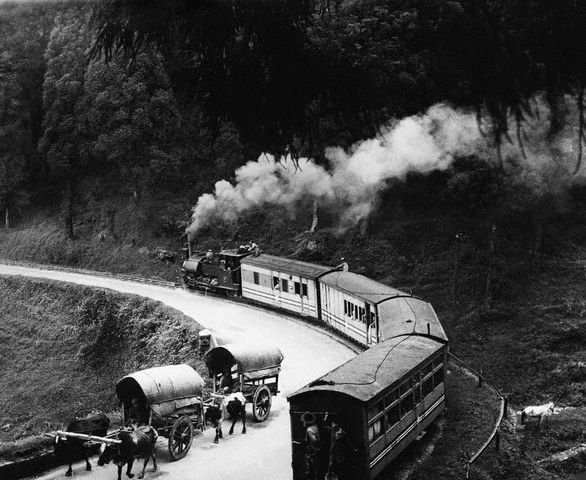
The first is the zigzag. Where the slope is too steep to climb directly, the Darjeeling Toy Train runs forward onto a siding, then reverses up the next section of track, working its way up the hillside in a series of switchbacks.
The second is the loop, where the line circles round and crosses over itself to gain or lose height in a short distance. The most famous of these is the Batasia Loop, completed in 1919 between Ghum and Darjeeling. The track curls around a landscaped garden with a memorial to Gorkha soldiers of the Indian Army at its centre, and on a clear day the snow peaks of Kangchenjunga, one of the highest mountains in the world, fill the horizon behind it.
“Faced with slopes too steep to climb head-on, the engineers simply taught the train to reverse up them. The method has hardly changed since the Victorian era, and neither has the view.”
British Steam in the Himalayas
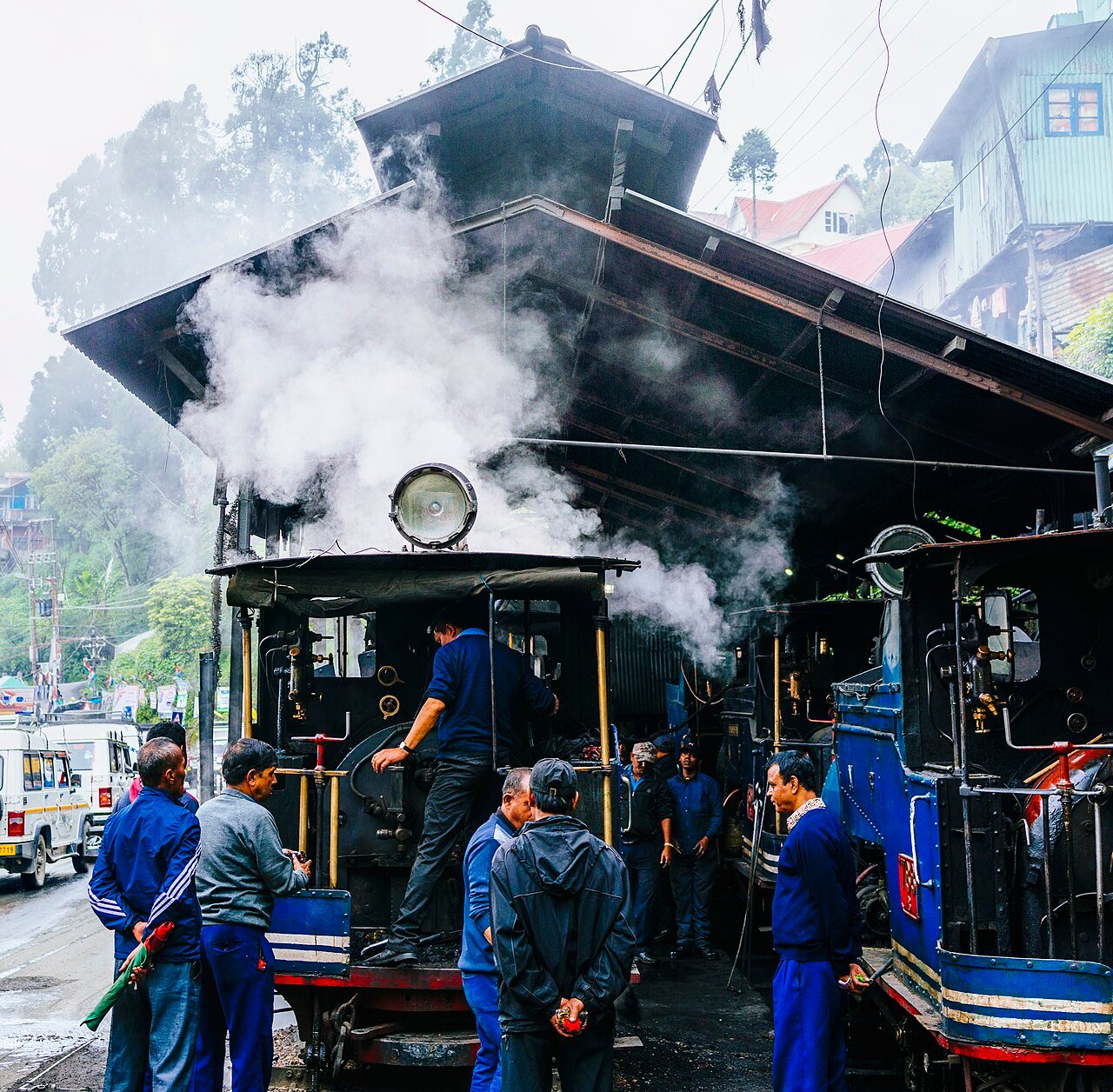
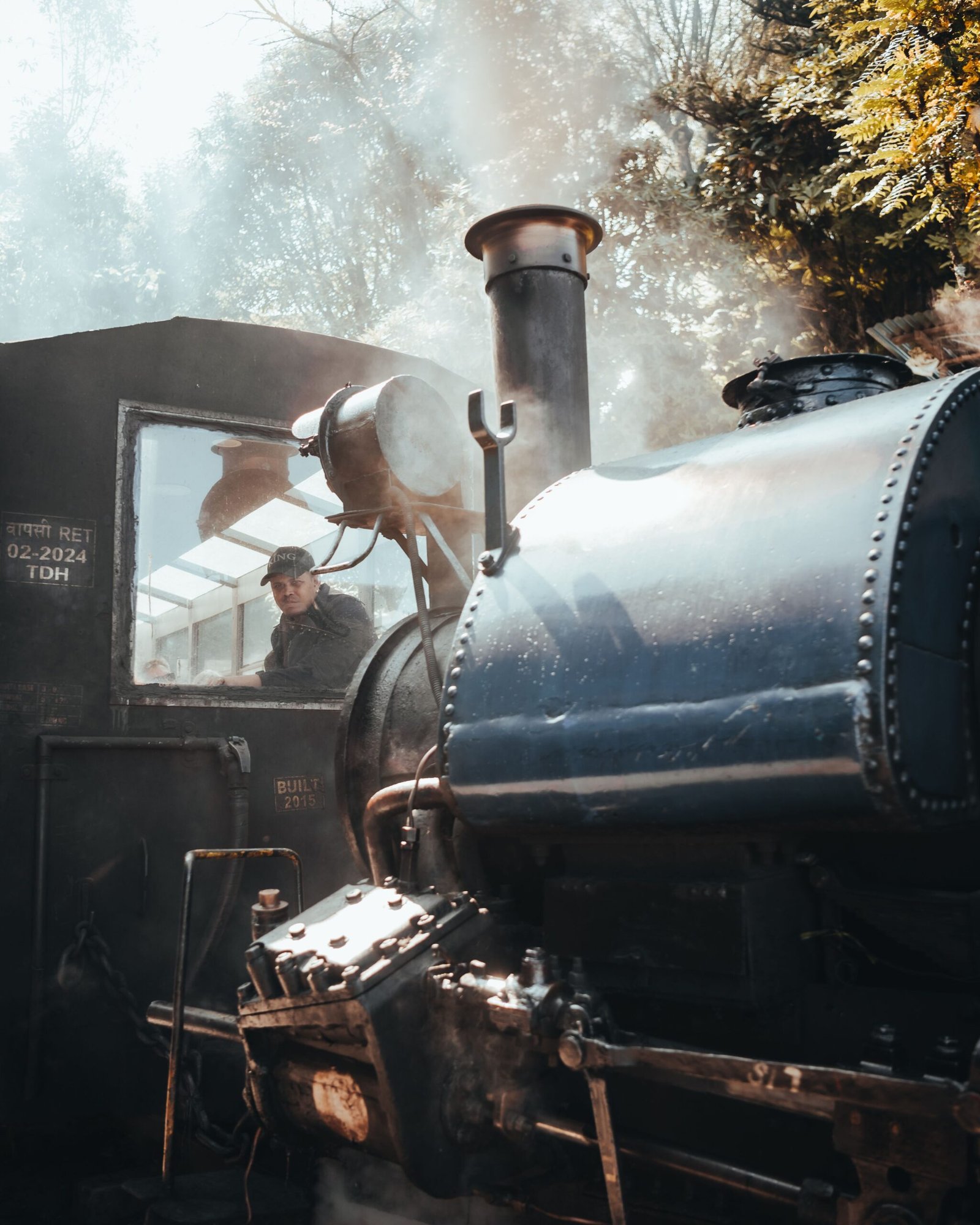
The railway’s most celebrated engines are its steam locomotives, known as the B class and built mostly in Britain between the late 1880s and the 1920s. Several are still working the line more than a century later, maintained in the railway’s own workshops. Diesel engines now haul many of the regular services, but the sight and sound of steam on the hillside remains the image most travellers carry home from the Darjeeling Toy Train.
“In 2007, the Hollywood film The Darjeeling Limited borrowed the town’s name for a fictional train carrying three brothers across India. The real line is smaller, slower and more than a century older.”
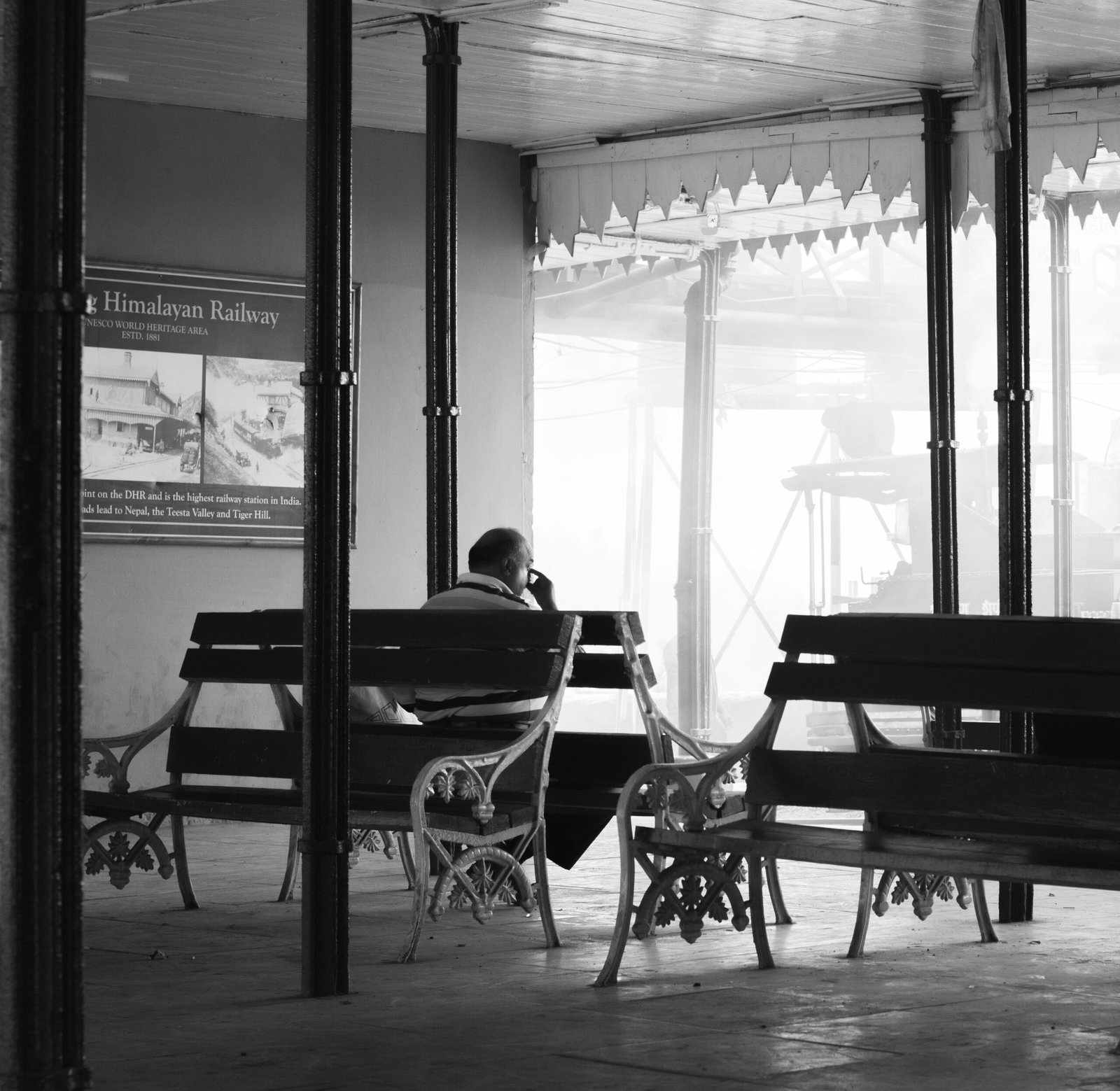
In 1999, the Darjeeling Himalayan Railway, home of the Darjeeling Toy Train, became one of the first railways in the world to be listed as a UNESCO World Heritage Site. Two other historic hill railways were later added to the listing, now known as the Mountain Railways of India.
Darjeeling Toy Train: Ride from Kurseong to Darjeeling
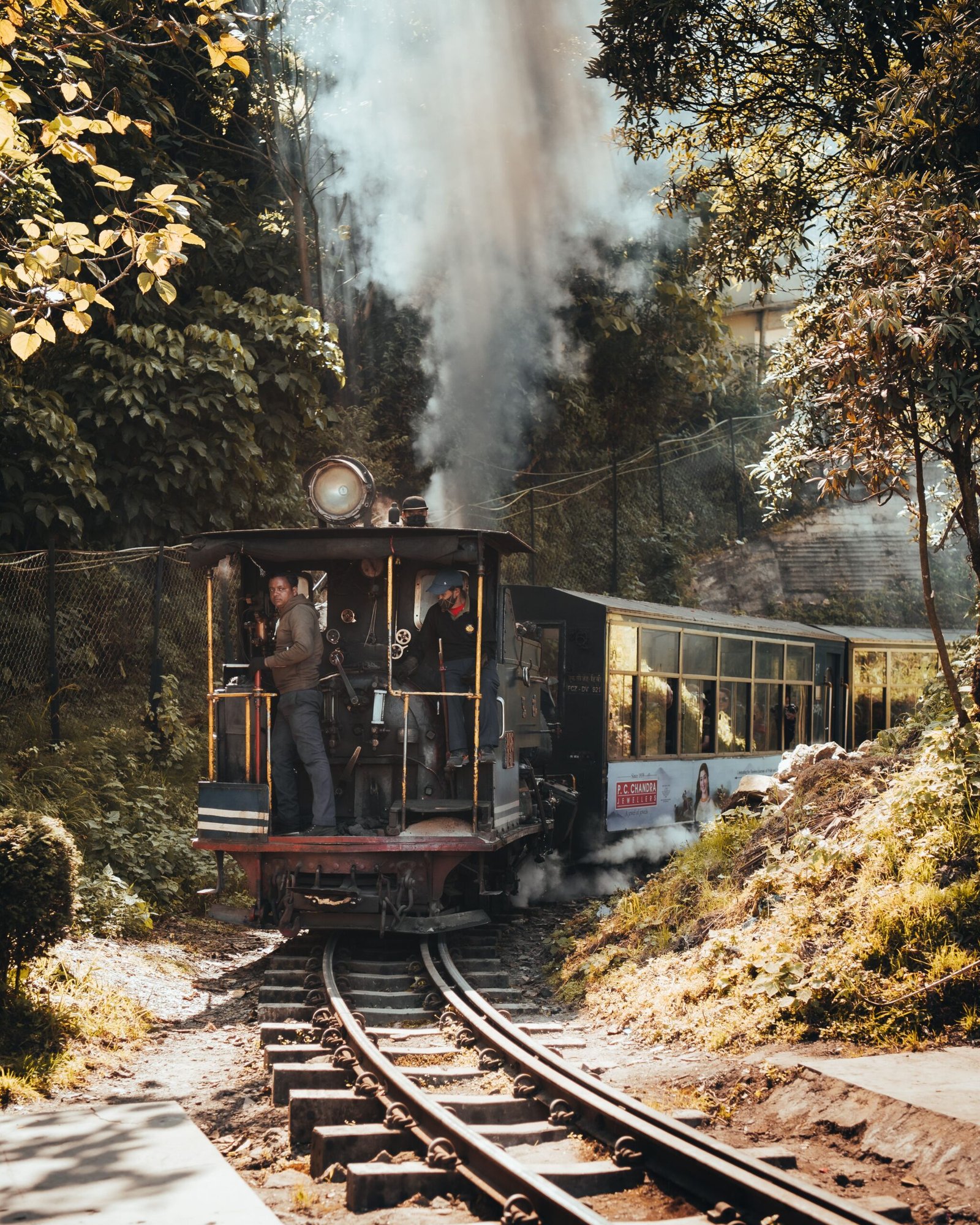
Many visitors ride the Darjeeling Toy Train on its upper section, from Kurseong, a hill town surrounded by tea estates. From here the track runs alongside the road, crossing it again and again, and passes so close to houses and shopfronts that passengers could almost reach out and touch the market stalls as the train edges by.
The climb continues through forest and small villages to Ghum, where the air turns noticeably cooler, and the views open up across the valleys. Just beyond, the train descends around the Batasia Loop before rolling into Darjeeling station in the heart of the town. Many travellers who plan luxury train journeys in India now build in a ride on this line, and it is usually the short stretch they talk about longest.
“There are faster ways up to Darjeeling, but none of them pass this close to the shopfronts. On a line like this, the slow pace is the whole point.”
Riding the Toy Train on the Bombay Kolkata Mail
The Bombay-Kolkata Mail, a 14-day train journey across India from Mumbai to Kolkata, includes a ride on one of the Mountain Railways of India. Seven nights aboard the Deccan Odyssey, one of the finest examples of a luxury train in India, carry guests through Vadodara, Udaipur, Ranthambore, Jaipur, Agra and Varanasi before the train is left behind at Siliguri, at the foot of the Himalayas. From there, guests continue by road to Kurseong and board the Darjeeling Toy Train for the climb to Darjeeling, followed by a day of mountain views at Tiger Hill, Ghoom Monastery and the town’s colonial streets. A short flight then carries the journey on to Kolkata for its final days.
The next departure runs from 4 to 17 February 2027, when winter skies over the Himalayas tend to be at their clearest. Speak to a Marée & Meridian journey curator to reserve your place.