
The railway from Chennai to Mumbai runs off the ancient granite of southern India and onto the volcanic basalt of western India, and the change in rock is recorded in the temples along the way. It is not the usual reason for choosing the best train travel in India, but it may be one of the better ones. From the 7th to the 16th century, builders here turned two of the hardest stones available to them into temples that have outlasted every kingdom that paid for them. Seeing them by rail is the best train travel in India for anyone curious about history.
Tour
Marée & Meridian
October 5, 2026
Six of the finest examples sit on a single heritage rail journey from Chennai to Mumbai aboard the Deccan Odyssey one of India’s great luxury train journeys, and seeing them in sequence makes the story easy to follow. Some were carved straight out of the rock. Others were assembled from cut blocks.
Much of southern India rests on some of the oldest rock on the planet. The granite around Hampi, in the state of Karnataka, is more than two billion years old. Granite is dense, hard and slow to weather. It is slow and difficult to carve, but once worked it keeps its detail for centuries, which helps explain why so much early temple sculpture in the region has survived. It is also why the south offers some of the best train travel in India for lovers of architecture.
What remains is a complete temple complex, with shrines, pillared halls, a stone bridge and carved elephants, its main tower standing more than 30 metres above the courtyard. It was conceived as Mount Kailash, the Himalayan home of the Hindu god Shiva, and it ranks among the largest single excavations in the history of rock-cut architecture. Reaching it by rail is a fitting end to the best train travel in India.
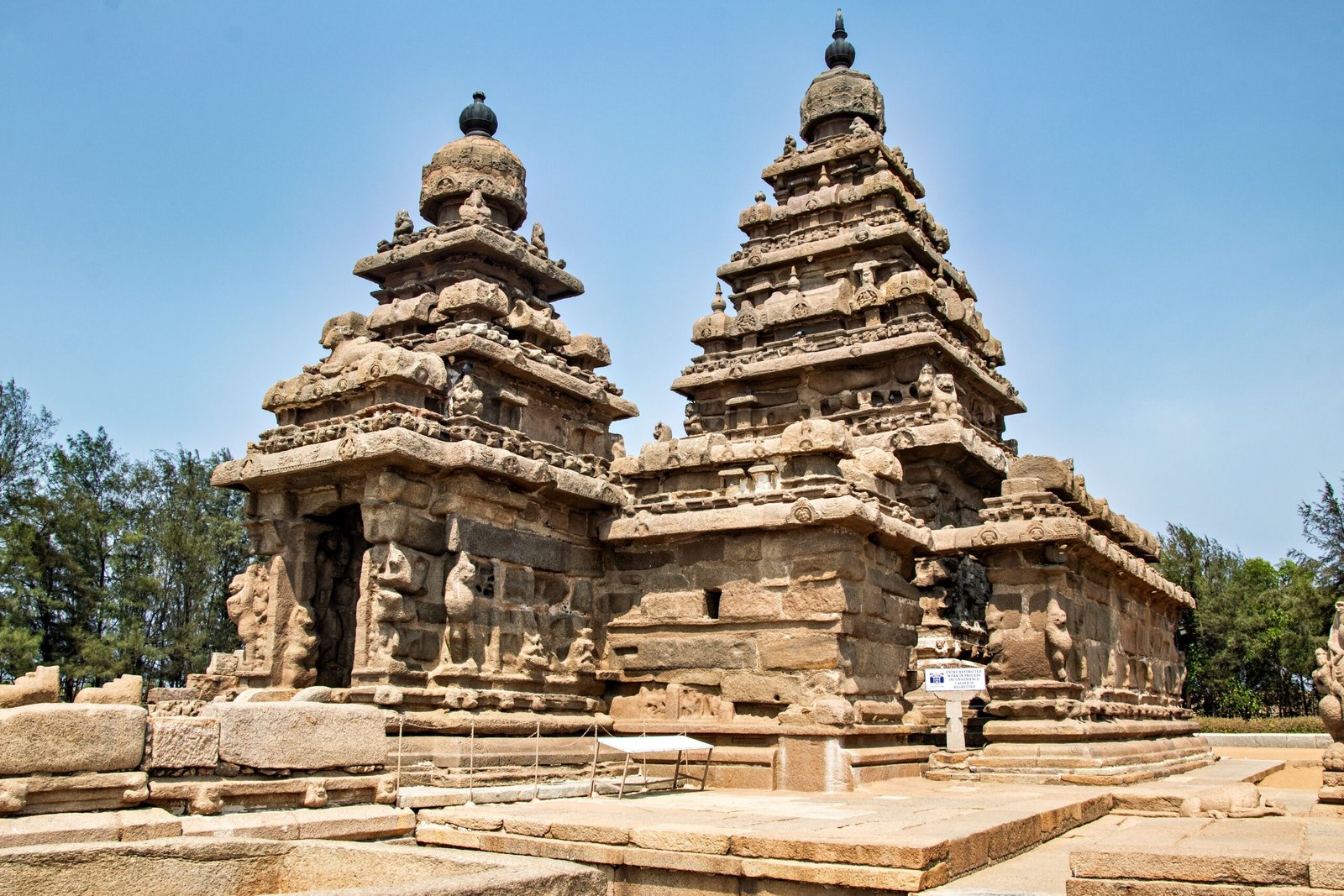
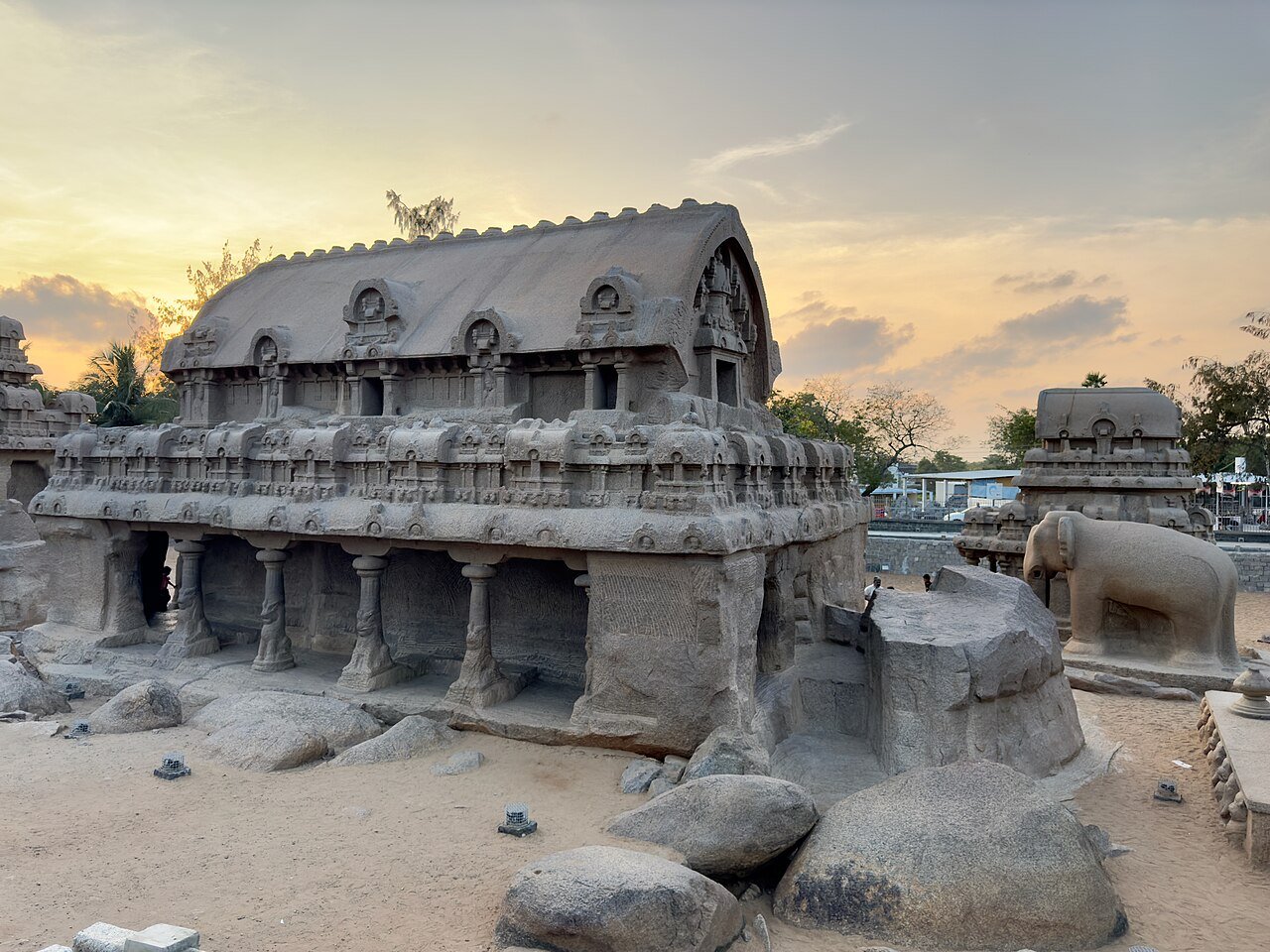
By the time work began on the Kailasa, the Pallavas had already moved on to masonry. The Shore Temple at Mahabalipuram, dating from the early 8th century, was assembled from dressed granite blocks and is one of the earliest important free-standing stone temples in southern India. It holds three shrines, two dedicated to Shiva and one to Vishnu, and has faced the Bay of Bengal for some 1,300 years, which shows in the softened edges of its carvings. Together with the Pancha Rathas, it forms part of a UNESCO World Heritage Site inscribed in 1984.
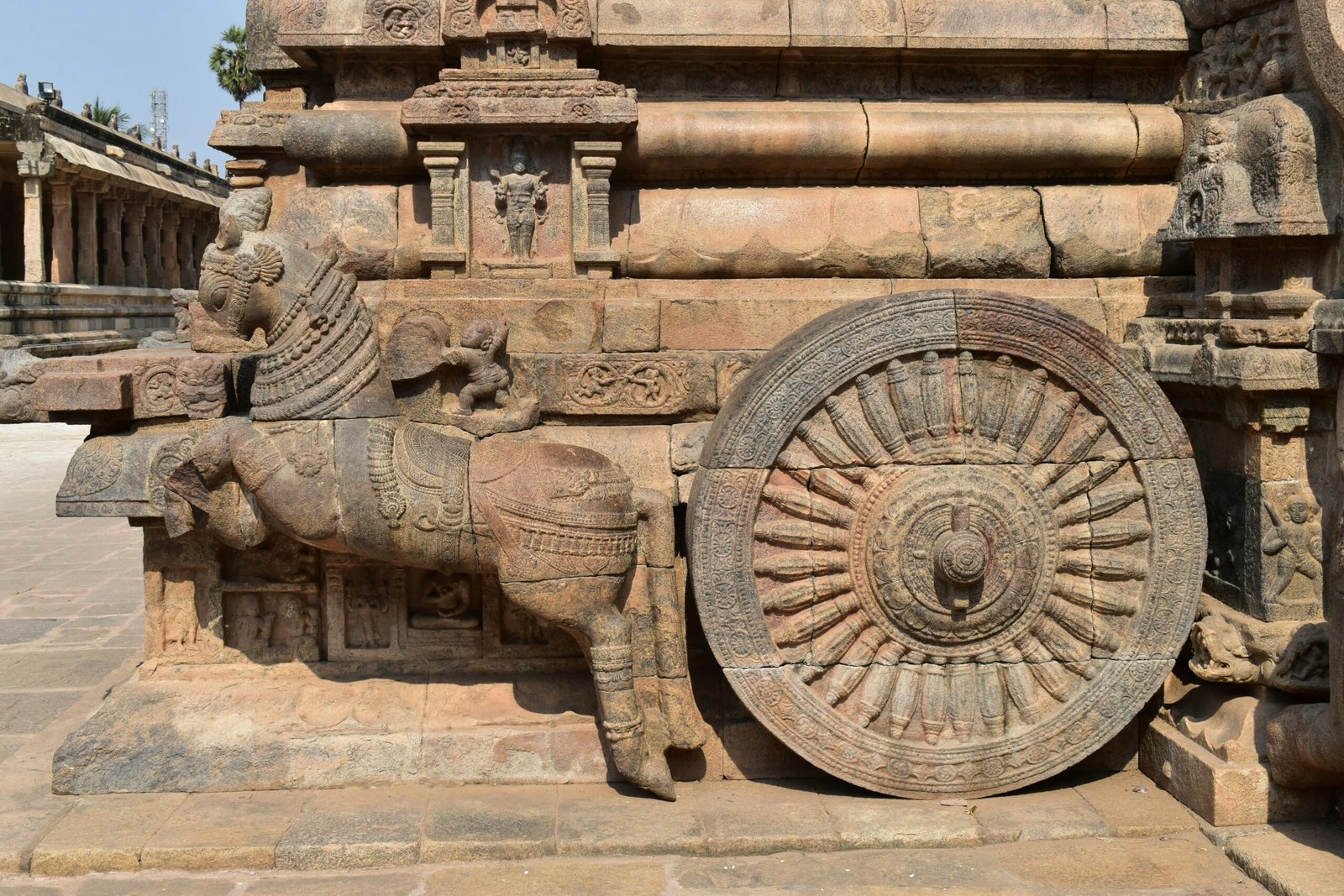
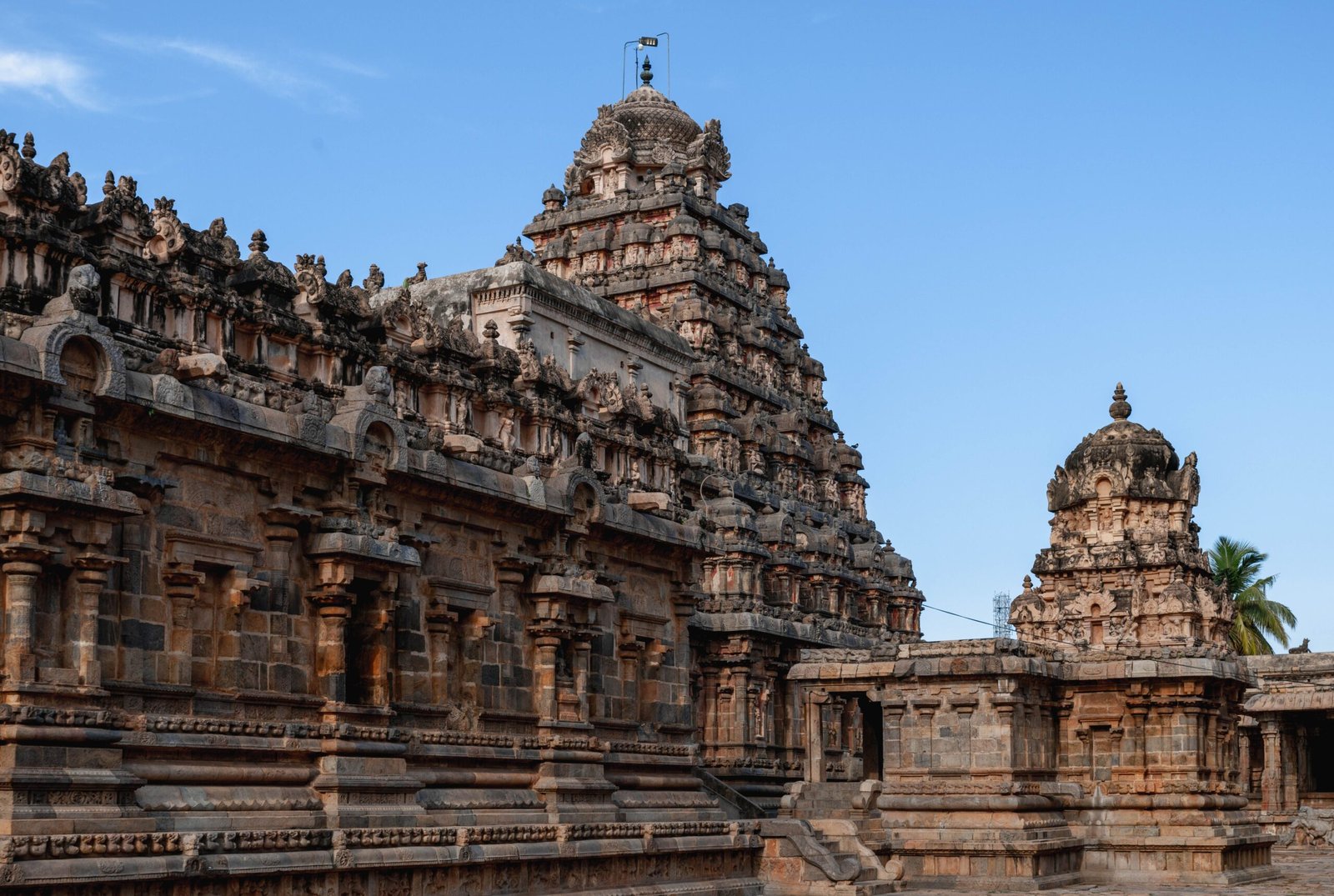
The logistics deserve as much credit as the design. Thanjavur lies in a fertile river delta with no granite quarries close by, so every block had to be brought in from elsewhere. The temple remains in daily worship, the visit on the Deccan Odyssey comes at dusk, when the low sun warms the colour of the stone.
Hampi was the capital of the Vijayanagara Empire, which ruled much of southern India for more than two centuries, and its builders had granite on every side, piled in boulders the size of houses. The Vittala Temple, begun in the 15th century and expanded under King Krishnadevaraya in the early 16th century, is the most elaborate thing they made from it. For many travellers, it is the moment that defines the best train travel in India.
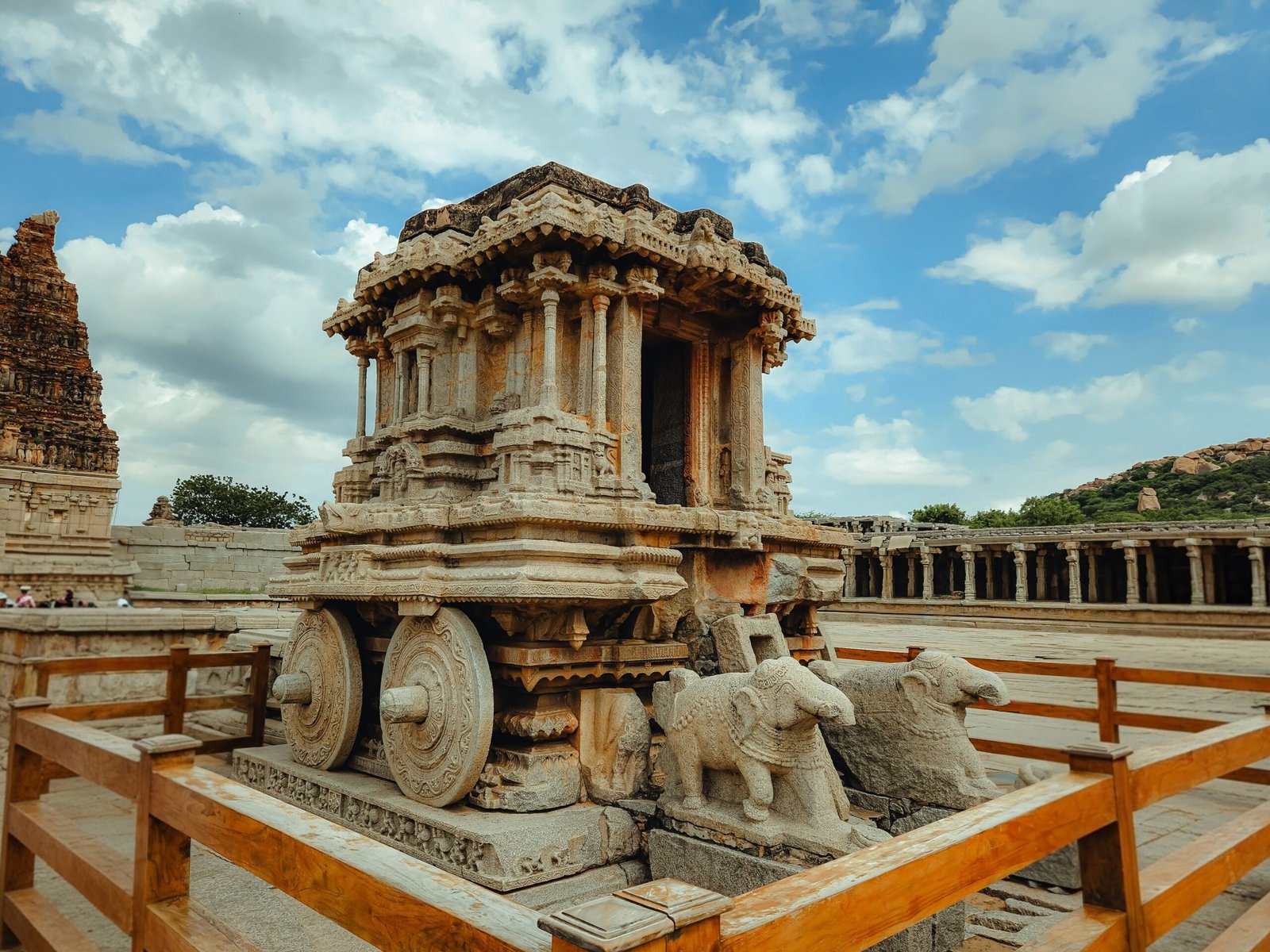
The temple’s great hall adds a second surprise, granite pillars that produce musical tones when tapped, although visitors are no longer allowed to test them. The city was sacked in 1565, and its ruins have been a UNESCO World Heritage Site since 1986.
Seen one at a time, these sites are scattered across three states, from Tamil Nadu through Karnataka to Maharashtra, and reaching them independently means a patchwork of domestic flights and long road transfers. This is where luxury train journeys earn their place, since the train covers the distances and the unpacking happens once.
The Great Southern Mail, a Marée & Meridian journey aboard the Deccan Odyssey, offers some of the best train travel in India. It departs Chennai on 22 January 2028 and arrives in Mumbai on 29 January. The Brihadisvara and the Airavatesvara fall on day three, the Shore Temple and the Pancha Rathas on day four, the Vittala Temple on day five and the Kailasa at Ellora on day seven, with every excursion guided and included.
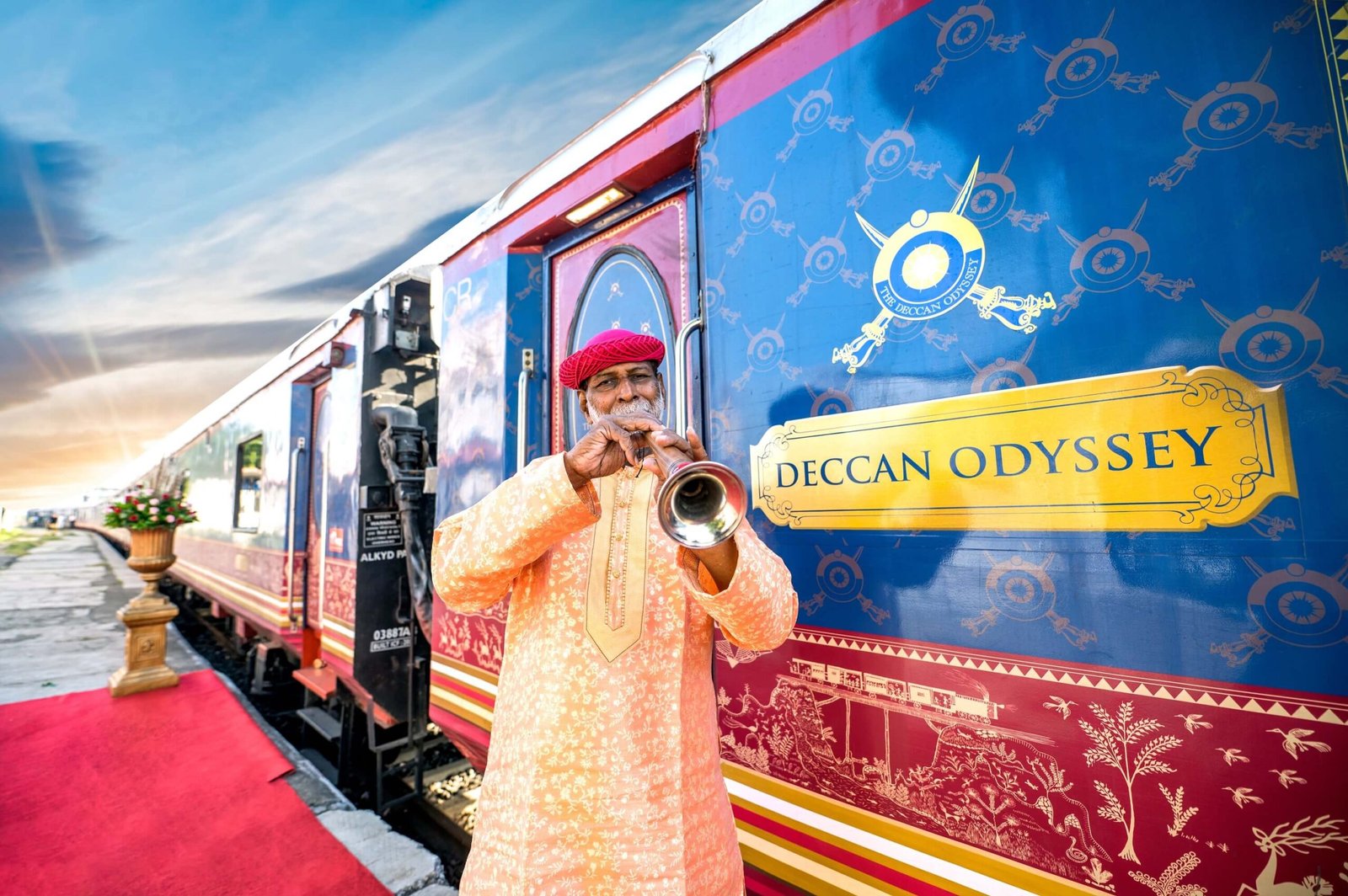
On board, the Deccan Odyssey provides a personal butler for each cabin, along with a lounge car, bar, spa and dining restaurants, so the hours between one temple and the next are well spent aboard one of India’s finest luxury train journeys. Few of India’s luxury train journeys take in this many of the country’s great stone temples on a single route, and for anyone curious about how medieval India built, this one has a strong claim to being the best train travel in India, and one of the finest journeys in the country by any measure.