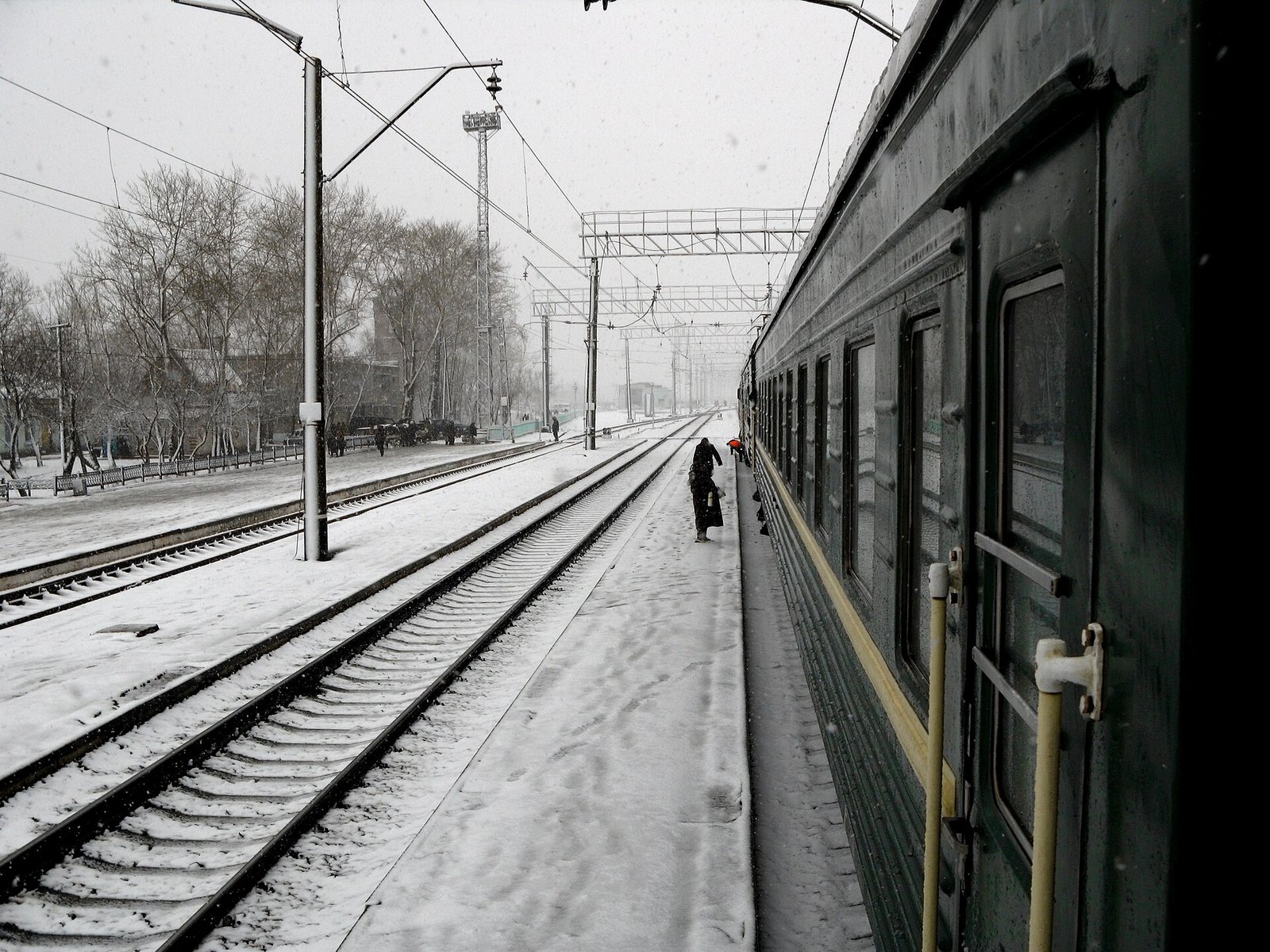
Off-Train Excursions Across Siberia
Excursions are built into the itinerary at a pace that keeps fatigue at bay while giving guests substantial time in the country they are crossing. In Ulan Ude, capital of the Buryat Republic where Russian and Mongolian cultures converge, guests visit the Old Believers’ village of the Semeiskie community. This religious group has lived in Transbaikalia since Catherine the Great exiled them from the western reaches of the empire in the 18th century. UNESCO named the Semeiskie’s cultural space and oral culture, including their polyphonic singing, one of the first 19 Masterpieces of the Oral and Intangible Heritage of Humanity in 2001.
Lake Baikal fills a full day, with a barbecue lunch on the shore weather permitting, a boat crossing to the fishing village of Listvyanka, and a visit to the Baikal Museum with its aquarium of endemic species. The lake holds roughly a fifth of the world’s unfrozen freshwater and reaches depths of 1,642 metres, ranking it as the deepest freshwater lake on the planet. Departing Baikal, the train travels the Circum-Baikal Railway, an early-20th-century engineering achievement with dozens of tunnels, stone galleries, and hundreds of bridges cut through the cliffs of the lake’s southern shore. The Russian Empire nicknamed it “the Golden Buckle of the Steel Belt of Russia” for its extraordinary construction cost.
Irkutsk follows the same day, and it is worth understanding why this city matters. In 1825, a group of Russian army officers and nobles staged an armed uprising in St Petersburg against Tsar Nicholas I, demanding constitutional reform and the end of serfdom. The revolt was crushed within a day. Its leaders were executed; the surviving conspirators, known as the Decembrists, were exiled to Siberia. Many settled in Irkutsk, where their wives famously followed them and built a cultured social life around the wooden mansions still standing today. The Trans-Siberian Express stop takes in the historic churches, the Decembrist houses, and an exclusive classical music recital held for guests.
“Lake Baikal is roughly 25 million years old. A single water molecule takes an estimated 330 years to pass through it from inlet to outlet. The train stops on its shore for one afternoon.”
Onboard Life and the Art of Luxury Train Travel
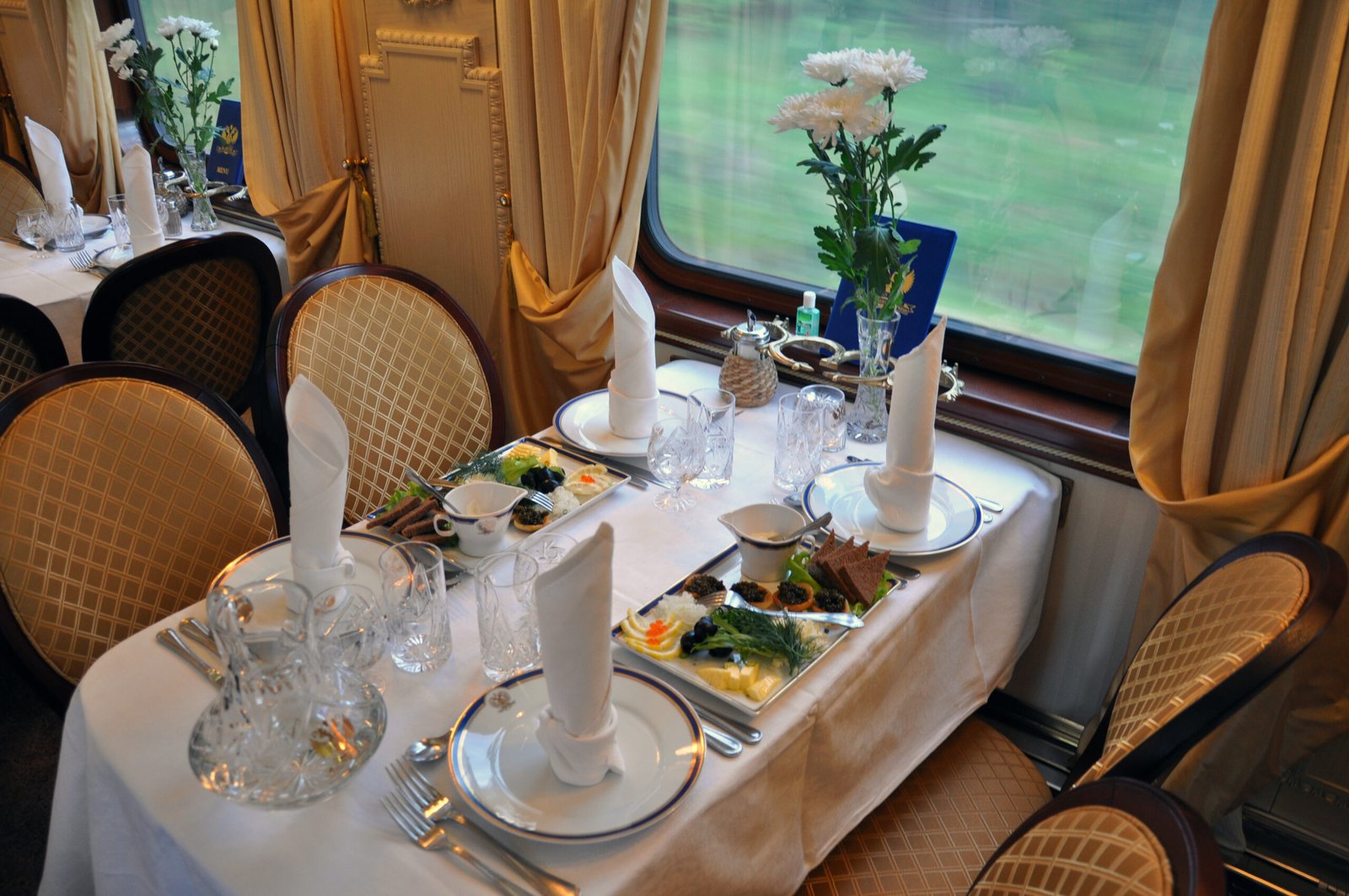
Between excursions, life aboard settles into something closer to a small hotel than a conventional train journey. The Russian-style dining cars serve buffet breakfasts, à la carte lunches, and dinners of three or four courses. Menus draw on Russian classics like borscht, beef stroganoff, and pelmeni dumplings, alongside Western dishes for guests who prefer them. Wine or vodka accompanies lunch and dinner, with one glass poured at midday and two in the evening as standard. Complimentary tea, coffee, water, and fresh fruit remain available throughout the day.
The bar carriage becomes the main social space after dark. Comfortable armchairs, a piano, and shared lounge areas turn the car into something between a private members’ club and a country-house drawing room. Live piano performances happen most evenings, along with informative talks on the regions the train is crossing. Card and board games sit ready for guests who prefer a slower style of leisure.
Cabins across the two accommodation classes come with daily housekeeping, fresh linens each day, and a cabin attendant on hand.
The Route from Vladivostok to Moscow
The scale of Vladivostok to Moscow as a rail journey takes some time to comprehend for those new to Russian geography. The train covers a distance greater than London to Beijing. It spans eight time zones and carries travellers from the Pacific coastline to European Russia in a single continuous passage.
Days aboard alternate between city stops and long stretches of continuous rail travel. Between Vladivostok and Ulan Ude, the train runs through the Russian Far East alongside the Amur and Shilka rivers, passing forests, small settlements, and long stretches of country where the railway is the only visible sign of human presence. After Irkutsk, another full day on the rails takes the train through central Siberia, passing Krasnoyarsk and the Yenisei River.
Novosibirsk, Siberia’s modern capital, was founded only in 1893 as a workers’ settlement for the Ob River bridge on the Trans-Siberian line. Yekaterinburg, on the eastern slopes of the Urals, is where the Romanov dynasty ended in July 1918. The Church on the Blood now stands on the site of the Ipatiev House basement where Tsar Nicholas II, Empress Alexandra, and their five children were executed by Bolshevik forces. Nearby, the obelisk marking the Europe-Asia border draws passengers out onto the platform for a ceremonial toast and photographs.
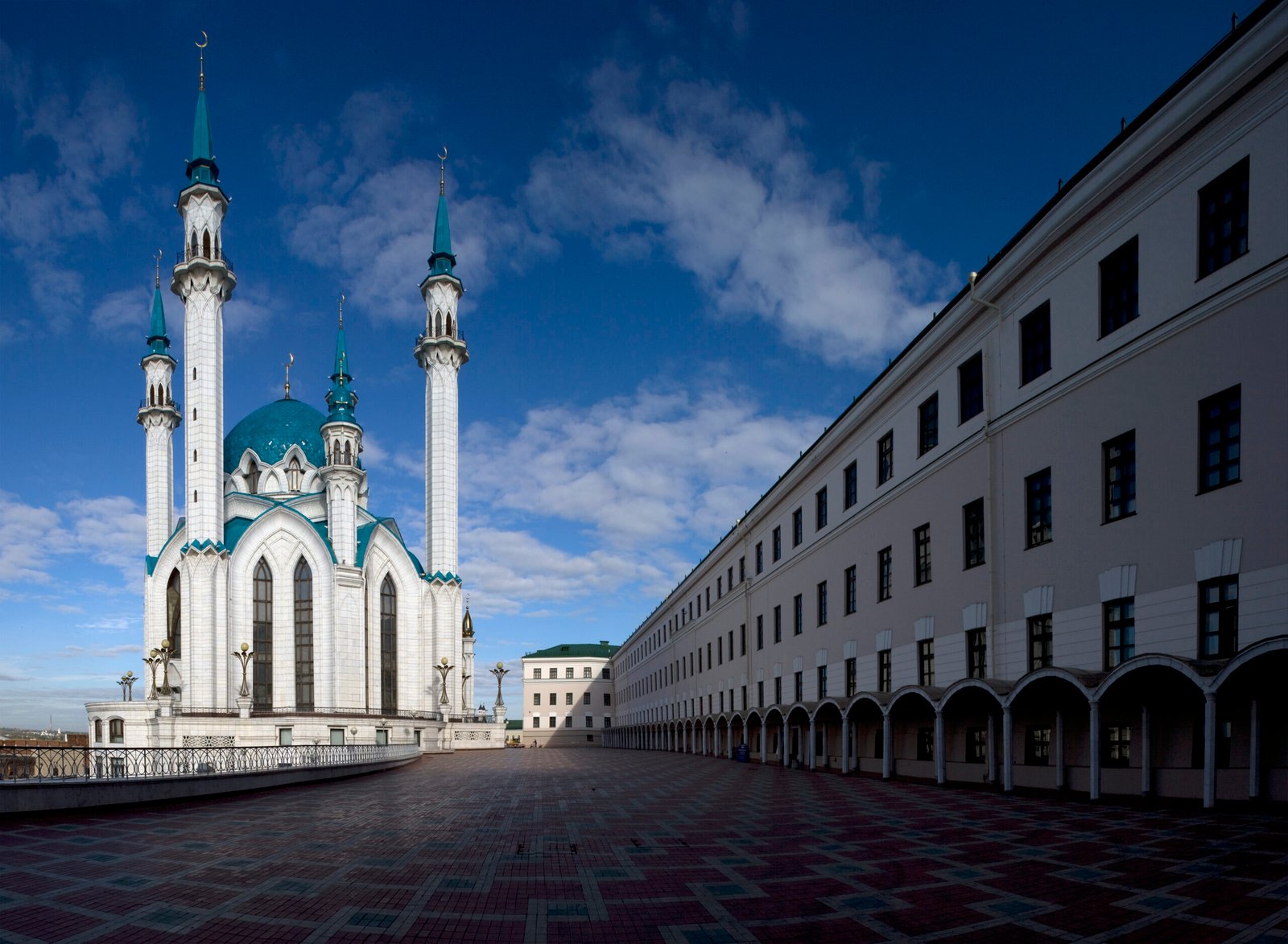
Kazan, capital of the Republic of Tatarstan on the Volga, brings a different kind of cultural encounter. The UNESCO-listed Kazan Kremlin houses the Kul Sharif Mosque, whose turquoise domes rise beside the Orthodox Annunciation Cathedral within the same fortress walls. The original mosque was destroyed by Ivan the Terrible’s forces in 1552; the current building was completed in 2005 for the city’s millennium celebrations. Bauman Street, the main pedestrian street through the old town, is where guests take free time between guided tours.
“In Russia, the railway is not just transport. It is the country’s spine, its bloodstream, its longest continuous conversation with itself. Ask any Russian to name a place they have never been but somehow know, and the answer is likely to lie somewhere along this line.”
Evenings in the Bar Carriage
Dinner service tends to run leisurely, with several sittings across the dining cars. Guests dress smartly for the evening meal without any expectation of black tie. Afterwards, the piano bar draws most passengers for at least a drink, and sometimes for hours of conversation as the train continues its westward passage into the night. Vodka appears with the appropriate zakuski, the pickled and salted accompaniments Russians regard as essential to the ritual.
Arriving in Moscow
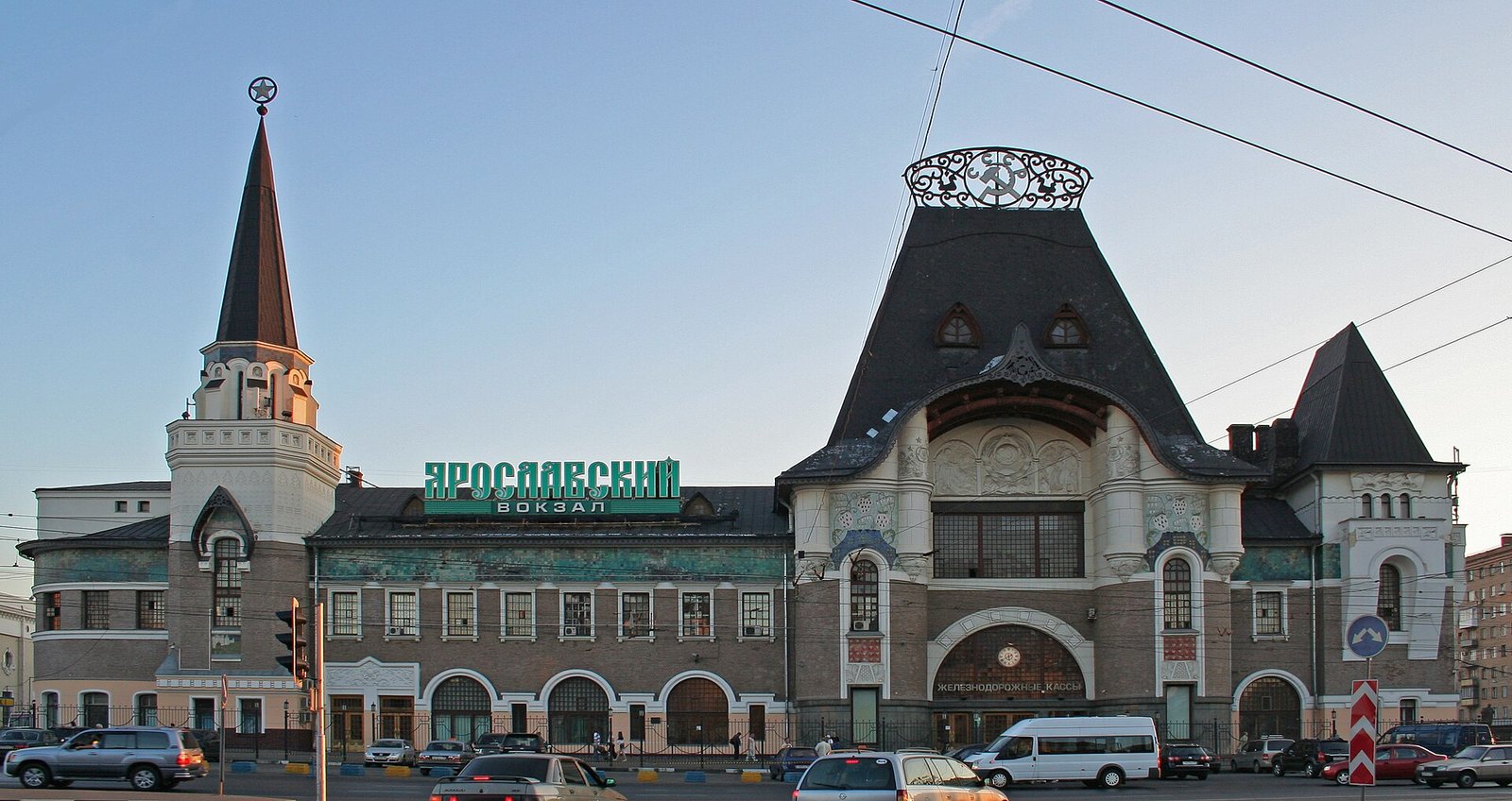
The Trans-Siberian Express pulls into Moscow on the morning of Day 12, ending the Vladivostok to Moscow passage that has crossed the width of Russia. Guests disembark to a full guided tour of the Russian capital, taking in the Moscow Kremlin and Red Square, listed together as a UNESCO World Heritage Site, along with the city’s museums and iconic landmarks. Lunch and dinner are taken at local restaurants; the final night is spent at a Moscow hotel before onward travel the next morning.
“Twenty-five years of construction. Tens of thousands of workers, many of them soldiers and convicts of the Russian Empire. The final rail was laid in 1916, and the route has never been surpassed.”
A Passage That Speaks for Itself
A journey of this scale, crossing 9,000 kilometres of Russia’s east-west span and passing through cultures a traveller could spend years studying independently, ranks the Trans-Siberian Express among the world’s most substantial epic train journeys. It is a journey defined by its scale, its history, and the way it moves through a country still poorly understood by most of the world.
The next departure of the
Trans-Siberian Express runs from Vladivostok to Moscow between 14 and 24 July 2027. Fares start at USD 23,500 per person in a Silver Class cabin.
Limited compartments make early
reservations advisable.